Made by humans for humans. No generative AI or AI voices were used in the making of this video.Watch this video ad-free and sponsor-free on Nebula: https://n...
At least trucks are useful for farmers and construction workers. What you need to focus on is making your transit network better so nobody needs a small car at all, and these trucks are only used by the few people who need a big truck.
Right. They should only be used by the few people that need them. But the reality is there are a lot of people with no business owning a big truck driving them in places that big trucks have no business being in
I’ve known plenty of people in southern US states who drive trucks for purposes that don’t require trucks. They’ll never choose public transit over their trucks, no matter how good it is.
…Though, realistically, that’s not exclusively a truck issue. If one can just step outside and get into their own car and be immediately en route to their destination, on their own schedule/convenience, it’ll be hard to convince them to choose a less convenient mode of transportation.
Are you sure they wouldn’t use transit? Or is it just all the transit they have ever seen is so bad they wouldn’t use it and they have no vision of what could be - but if somehow you built they great transit they would use it?
They won’t. It’s a cultural thing. Being perceived as poor is a taboo for them and they will lose status in their tribe and lose their access to mating females. They may live in a fire-gutted trailer that’s powered by a 100 foot extension cord plugged into their uncle’s house but as long as they drive a giant land yacht they then their social honor will remain intact.
I’m very confident that they wouldn’t. However, I suppose it’s possible that I’ve never seen transit that could be so good that people would choose it over their own vehicles. What would that look like?
I suppose a few of them might do it if there’s free coffee on board (or beer, but that would be chaos lol) and it ran on VERY convenient schedules.
People in the US place a LOT of value in convenience, so the public transit system would have to offer something that outweighs that. Do you know of any examples?
Convience is needed. That means it is not more than 5 minutes from when you get to the stop until you are moving. It means you can get to a lot of places in a short time. It doesn’t mean cofiee - bring your own, or stop by a coffee shop and get on the next but/train which isn’t that long of a wait.
the above would cost a lot of money - but it is much less than people spend on cars.
You mean serious farmers and construction workers are better off with an american style “truck” (60% comfy family and passanger space, 40% bed for your construction stuff) than with a van or a “classic” truck (two seats and a big bed for all your stuff)?
That will depend on what they are doing. a lot of construction crews need a seat for everyone on the crew, and the small bed is enough. The reason trucks cabs have got much larger as we no longer accept people riding in the bed of the truck, or in front with no seat belt. This is overall for the better, but either the truck needs to be longer or your need a shorter bed.
The only people who can afford these 100k€ rams and f150s are rich assholes. Farmers drive around in their toyota hilux or ford ranger that is small in compariaon to these massive american trucks and all of the construction workers use vans.
Not the same seating capacity though. Also, it’s hard to tell, but it seems like there’s a difference in bed widths?
Edit: Could someone help me understand the downvotes? The seating capacity is just an objective fact, so was it the speculative difference in bed width? Or something else? (Sometimes I have difficulty understanding people)
This may sound dumb, but I honestly don’t know how to answer that, lol. The first answer that comes to mind is “for passengers to sit in,” but that just seems too obvious. Is there more to the question?
I only ever see smaller trucks here; it doesn’t seem to be a problem to only seat two people. Don’t the American trucks have more seating because they’re doubling as family cars?
The weight capacity of the truck on the right is much higher than the light-duty truck on the left. Jobs that require trucks of that capacity tend to require more workers, so it makes sense to seat more passengers.
The truck on the left might be more comparable to something like the Ford Ranger (the older generations). Many of those were single-cab (i.e. no back seats) models, but some of them would have two tiny, uncomfortable “jump seats” as back seats.
You’re not completely wrong though. I have known some workers who would also use their trucks as family cars if it was their only vehicle.
But I don’t see trucks like that around here despite the city undergoing constant construction, so they’re moving around materials and people just fine without them. Mostly I see box trucks and dump trucks.
Even if the job requires more workers, why are they all in the same vehicle? Is the boss going around to their houses to pick them up? Or if they’re meeting somewhere and then going out together, why not just go directly to the job site from home? Surely a large job has an on-site office and storage rather than hauling everything back and forth constantly.
These questions are getting more broad, and the answer to all of them is “it depends on the job”.
Light duty trucks and box trucks are also commonly seen at various job sites. It’s also quite common to see a truck pulling a trailer – and there are lots of different types of trailers. Choosing the right tool for the job just depends on what the job is.
Here’s one example from a job I once had, long ago. If you fill one of these with water, it already exceeds the weight limit of the little truck on the left:
And, depending on the size of the job, some jobs would require more than two people to get the job done. Those crews would get the trucks that have backseats.
Sure, you might be able to find smaller IBC tote tanks and just use more trucks, but that would be pretty inefficient, especially if each truck/crew has to drive hundreds (or even 1k+, in some cases) of miles to reach each job site on its route.
We also used box trucks in some cases. Some job sites required using two IBC totes, which did not fit in any of the company’s pickup truck beds. For those routes, we rented box trucks. But for one IBC tote, a light duty truck is too small, and a box truck is too big.
As a farmer in Japan, not all tractors are even road legal here. It would also take me hours on a tractor to go get anything of size. That said, I also don’t need or want american-sized trucks for that. We have kei trucks.
farmers use a truck to get things to/from town. Farmers are constant running to town to get parts and supplies. Tractors work, but they are slow (and one passenger).


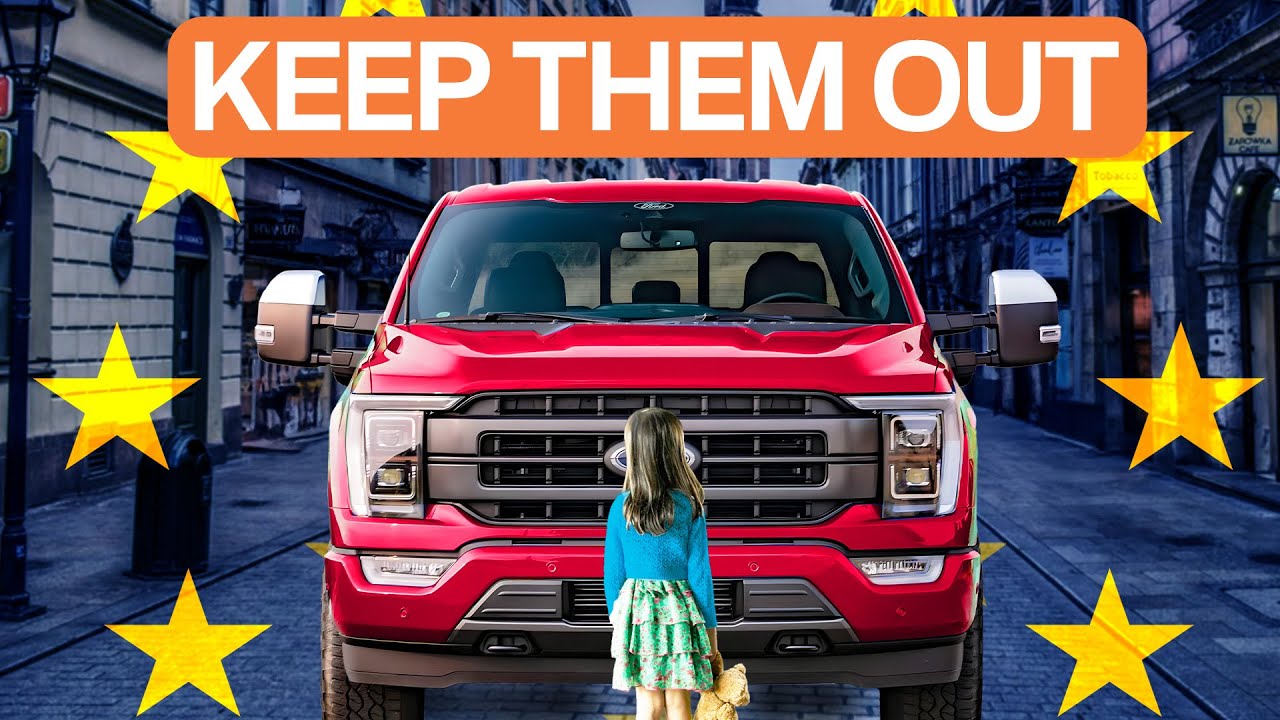
At least trucks are useful for farmers and construction workers. What you need to focus on is making your transit network better so nobody needs a small car at all, and these trucks are only used by the few people who need a big truck.
These are actually useful, working vehicles appropriate for European streets:
This, is not:
Did I miss your sarcasme or are you not connected to reality?
These truck should only be used by the few people who need a big truck. That is a small minority of people.
Right. They should only be used by the few people that need them. But the reality is there are a lot of people with no business owning a big truck driving them in places that big trucks have no business being in
Back to my point: fix tranit so more people don’t think they need to drive. Small cars are still vastly more dangeious than transit.
I’ve known plenty of people in southern US states who drive trucks for purposes that don’t require trucks. They’ll never choose public transit over their trucks, no matter how good it is.
…Though, realistically, that’s not exclusively a truck issue. If one can just step outside and get into their own car and be immediately en route to their destination, on their own schedule/convenience, it’ll be hard to convince them to choose a less convenient mode of transportation.
Are you sure they wouldn’t use transit? Or is it just all the transit they have ever seen is so bad they wouldn’t use it and they have no vision of what could be - but if somehow you built they great transit they would use it?
They won’t. It’s a cultural thing. Being perceived as poor is a taboo for them and they will lose status in their tribe and lose their access to mating females. They may live in a fire-gutted trailer that’s powered by a 100 foot extension cord plugged into their uncle’s house but as long as they drive a giant land yacht they then their social honor will remain intact.
I’m very confident that they wouldn’t. However, I suppose it’s possible that I’ve never seen transit that could be so good that people would choose it over their own vehicles. What would that look like?
I suppose a few of them might do it if there’s free coffee on board (or beer, but that would be chaos lol) and it ran on VERY convenient schedules.
People in the US place a LOT of value in convenience, so the public transit system would have to offer something that outweighs that. Do you know of any examples?
Convience is needed. That means it is not more than 5 minutes from when you get to the stop until you are moving. It means you can get to a lot of places in a short time. It doesn’t mean cofiee - bring your own, or stop by a coffee shop and get on the next but/train which isn’t that long of a wait.
the above would cost a lot of money - but it is much less than people spend on cars.
should, yes.
deleted by creator
deleted by creator
farmers use tractors. construction workers use vans. nobody here uses big trucks.
You mean serious farmers and construction workers are better off with an american style “truck” (60% comfy family and passanger space, 40% bed for your construction stuff) than with a van or a “classic” truck (two seats and a big bed for all your stuff)?
That will depend on what they are doing. a lot of construction crews need a seat for everyone on the crew, and the small bed is enough. The reason trucks cabs have got much larger as we no longer accept people riding in the bed of the truck, or in front with no seat belt. This is overall for the better, but either the truck needs to be longer or your need a shorter bed.
lol
The only people who can afford these 100k€ rams and f150s are rich assholes. Farmers drive around in their toyota hilux or ford ranger that is small in compariaon to these massive american trucks and all of the construction workers use vans.
deleted by creator
Not the same seating capacity though. Also, it’s hard to tell, but it seems like there’s a difference in bed widths?
Edit: Could someone help me understand the downvotes? The seating capacity is just an objective fact, so was it the speculative difference in bed width? Or something else? (Sometimes I have difficulty understanding people)
deleted by creator
What do you need the extra seats for?
This may sound dumb, but I honestly don’t know how to answer that, lol. The first answer that comes to mind is “for passengers to sit in,” but that just seems too obvious. Is there more to the question?
I only ever see smaller trucks here; it doesn’t seem to be a problem to only seat two people. Don’t the American trucks have more seating because they’re doubling as family cars?
The weight capacity of the truck on the right is much higher than the light-duty truck on the left. Jobs that require trucks of that capacity tend to require more workers, so it makes sense to seat more passengers.
The truck on the left might be more comparable to something like the Ford Ranger (the older generations). Many of those were single-cab (i.e. no back seats) models, but some of them would have two tiny, uncomfortable “jump seats” as back seats.
You’re not completely wrong though. I have known some workers who would also use their trucks as family cars if it was their only vehicle.
But I don’t see trucks like that around here despite the city undergoing constant construction, so they’re moving around materials and people just fine without them. Mostly I see box trucks and dump trucks.
Even if the job requires more workers, why are they all in the same vehicle? Is the boss going around to their houses to pick them up? Or if they’re meeting somewhere and then going out together, why not just go directly to the job site from home? Surely a large job has an on-site office and storage rather than hauling everything back and forth constantly.
These questions are getting more broad, and the answer to all of them is “it depends on the job”.
Light duty trucks and box trucks are also commonly seen at various job sites. It’s also quite common to see a truck pulling a trailer – and there are lots of different types of trailers. Choosing the right tool for the job just depends on what the job is.
Here’s one example from a job I once had, long ago. If you fill one of these with water, it already exceeds the weight limit of the little truck on the left:
And, depending on the size of the job, some jobs would require more than two people to get the job done. Those crews would get the trucks that have backseats.
Sure, you might be able to find smaller IBC tote tanks and just use more trucks, but that would be pretty inefficient, especially if each truck/crew has to drive hundreds (or even 1k+, in some cases) of miles to reach each job site on its route.
We also used box trucks in some cases. Some job sites required using two IBC totes, which did not fit in any of the company’s pickup truck beds. For those routes, we rented box trucks. But for one IBC tote, a light duty truck is too small, and a box truck is too big.
No you don’t need a truck like that as a farmer. As a farmer you have a tractor and other farming equipment. You don’t need them at all.
Construction workers use a classical bus or speeder they don’t need them either.
As a farmer in Japan, not all tractors are even road legal here. It would also take me hours on a tractor to go get anything of size. That said, I also don’t need or want american-sized trucks for that. We have kei trucks.
farmers use a truck to get things to/from town. Farmers are constant running to town to get parts and supplies. Tractors work, but they are slow (and one passenger).